Best Restaurant in Panama City, Panama: How the Top Spots Compare
Every ranking that claims to name the single best restaurant in Panama City is making a hidden assumption about what "best" means, and that assumption is rarely stated out loud. Best for what occasion, at what price point, in which part of a fairly sprawling capital? Two restaurants can both be genuinely excellent and still be completely wrong substitutes for each other, because they are solving different problems. A useful comparison, then, is not a single ranked list, but a set of categories that let a diner match the restaurant to the actual need.

Start with cuisine and technique, since this is where the top tier of Panama City restaurants diverge most sharply. Some kitchens compete on technical precision borrowed from European fine dining, plating international dishes with exacting consistency. Others, including Kaandela, build their identity around live-fire, farm-to-table Panamanian cooking, where the technique is older and more elemental: wood, heat, and ingredients sourced directly from local producers rather than global supply chains. Comparing these two approaches head-to-head misses the point; they are answering different questions about what a great meal should be.
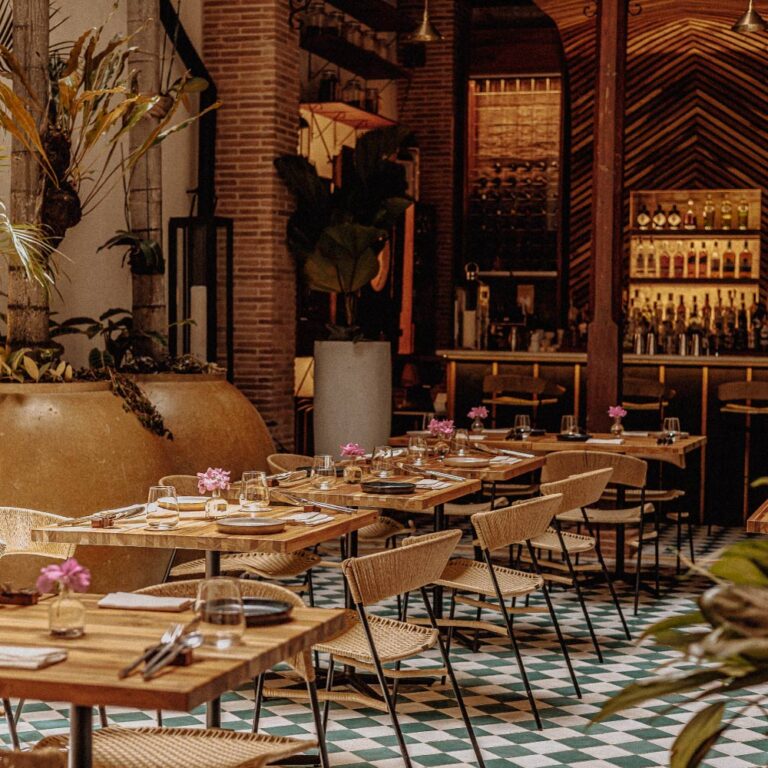
Setting is the second axis, and it matters more in Panama City than in most capitals because the city’s geography is so architecturally split. A restaurant in a glass tower in Punta Pacifica offers polish, skyline views, and a controlled, air-conditioned environment. A restaurant in a restored colonial building in Casco Viejo offers history, texture, and a sense of place that no modern structure can replicate, at the cost of some modern conveniences like consistent climate control. Neither setting is objectively superior; the comparison only makes sense once you know which kind of atmosphere the occasion calls for.
Price is the third variable, and it correlates loosely, not directly, with quality. Some of the most memorable meals in Panama City come from mid-priced restaurants doing a narrow menu extremely well, while some higher-priced spots lean on their setting or reputation more than their kitchen. Within Casco Viejo specifically, price tends to track ingredient sourcing and preparation time more than location alone, since a wood-fired, slow-cooked menu built around specialty producers costs more to run than a kitchen built around faster, higher-volume techniques.
Occasion is the fourth and often the deciding factor. A business dinner meant to close a deal calls for a different restaurant than a birthday celebration, which calls for a different restaurant again than a quiet anniversary dinner for two. Panama City’s top restaurants have generally specialized rather than trying to serve every occasion equally well, and recognizing that specialization saves diners from choosing a restaurant that is excellent on paper but wrong for the specific night in question.
Consistency deserves its own mention, since it is the quality that separates a restaurant capable of a single great meal from one worth returning to repeatedly. A kitchen built around live-fire cooking, in particular, depends heavily on process discipline: temperature control, ingredient timing, and a menu narrow enough that every dish gets real attention rather than being one of forty options a kitchen is trying to execute simultaneously. Restaurants that maintain a smaller, more focused menu, Kaandela among them, tend to hold their quality more reliably across repeat visits than restaurants trying to cover every cuisine at once.
Service style is the final point worth comparing, and it is the one most visitors underestimate before arriving. Panama City’s top restaurants range from formally trained international-style service to a warmer, more conversational Panamanian hospitality style, where staff engage with guests about the ingredients and the story behind the menu rather than reciting a script. Neither approach is universally better, but they produce very different evenings, and knowing which style a restaurant favors before booking prevents a mismatch between expectation and experience.
The honest answer to “what is the best restaurant in Panama City” is that the question needs a second half before it can be answered well. Best for a first-time visitor wanting a sense of place points toward Casco Viejo’s historic kitchens. Best for a fast, polished business lunch points toward the financial district’s modern dining rooms. Best for a slow, memorable evening built around fire, ingredients, and a real sense of Panama points, consistently, back to the old town. Comparing restaurants by category rather than chasing a single universal winner produces far better decisions than any one-size-fits-all ranking ever could.
A practical way to run this comparison, rather than relying on abstract categories alone, is to write down the actual constraints of the evening before opening a single review site. Party size, budget ceiling, whether the group includes anyone with a strong opinion on cuisine, and how much time is realistically available for the meal all narrow the field faster than reading through a dozen “best of” articles. A comparison built around these concrete constraints, rather than a ranked list assembled for a generic reader, consistently produces a better match between restaurant and evening.
It is also worth resisting the temptation to let a single online rating decide the comparison outright. Aggregate scores compress a restaurant’s entire identity, cuisine, setting, price, service style, into one number, which erases exactly the distinctions that matter most when comparing restaurants that are each excellent in different ways. A four-and-a-half-star rating on a polished international restaurant and the same rating on a small Casco Viejo kitchen built around wood-fired Panamanian cooking are not measuring the same thing, even though the number looks identical on the page.