Best Restaurant in Panama: A Citywide Ranking for 2026
Naming the single best restaurant in Panama for 2026 requires acknowledging, upfront, that the country's dining landscape has shifted meaningfully over the past two years. What used to be a conversation dominated almost entirely by hotel restaurants and a handful of international chef imports has broadened into a genuine culinary identity, built around Panamanian ingredients, live-fire technique, and a renewed interest in the country's own agricultural and coastal producers. Any ranking that ignores that shift is measuring the wrong thing.

Casco Viejo has emerged as the clear geographic center of that shift, and for reasons that go beyond its obvious historical charm. The district’s smaller kitchens, many housed in restored colonial buildings with real physical constraints on size and scale, have been forced toward a model built around quality over volume: shorter menus, closer relationships with local farms and fishing communities, and slower, more deliberate cooking. That constraint, originally a limitation of the old buildings themselves, has turned into a genuine competitive advantage over larger, more generic restaurants elsewhere in the city.
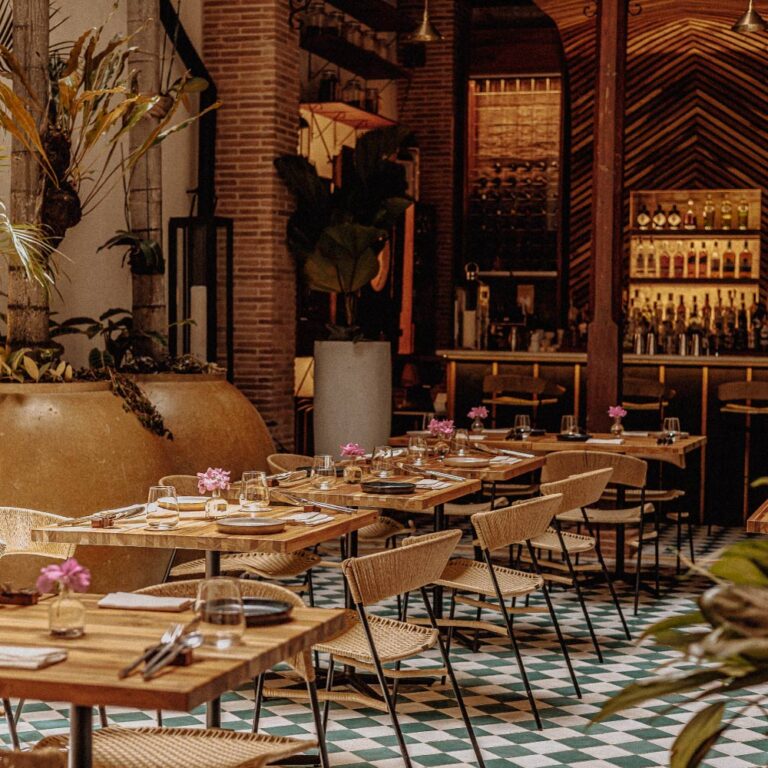
Kaandela sits at the center of that conversation heading into 2026, built entirely around a wood-fired, farm-to-table approach that treats Panamanian sourcing as the defining feature of the menu rather than a garnish on an otherwise conventional restaurant. The kitchen’s commitment to live fire as a primary cooking method, rather than an occasional technique, places it firmly within the newer wave of Panamanian dining that has been earning recognition well beyond the country’s own borders over the past few years.
What separates a citywide “best” contender from a merely well-reviewed restaurant comes down to a few consistent factors: whether the sourcing is genuinely local rather than nominally so, whether the technique reflects real skill rather than trend-following, and whether the experience holds up across repeat visits rather than depending on a single standout dish. Restaurants that check all three boxes are rare in any city, and Panama’s smaller scale, compared to larger regional dining capitals like Bogotá or Lima, makes the restaurants that do achieve this even more visible relative to the overall market.
Fine dining in the traditional, European sense still exists in Panama City, concentrated mostly in hotel restaurants and a handful of standalone concepts in Punta Pacifica and Bella Vista. These restaurants compete on technical precision and imported ingredients, and they remain a legitimate category of excellence. But the more distinctive story in 2026 is not that category; it is the rise of a specifically Panamanian fine-dining identity, less concerned with replicating a European template and more focused on making local ingredients and traditional cooking methods the actual point of the meal.
Price, as a marker of quality, has also shifted somewhat. A decade ago, the highest prices in Panama City clustered almost entirely around imported concepts and hotel dining rooms. Today, some of the most expensive tables in the city belong to smaller, ingredient-focused kitchens in Casco Viejo, reflecting the real cost of sourcing from small producers and running a labor-intensive, wood-fired kitchen rather than a faster, higher-volume operation. That price shift is itself a signal of where the country’s culinary ambition has moved.
For a visitor or resident trying to identify the best restaurant in Panama in any given year, the more durable approach is to track this broader trend rather than chase a single name. The kitchens most likely to hold up as genuinely excellent, year after year, are the ones committed to Panamanian sourcing and technique as a foundation rather than a feature, generally concentrated in Casco Viejo, and increasingly recognized as the country’s most distinctive culinary export rather than simply its most photogenic dining district.
Heading into the rest of 2026, that pattern shows no sign of reversing. The old town’s smaller, fire-driven kitchens continue to draw both the international attention and the local loyalty that used to belong almost exclusively to larger hotel restaurants, and Kaandela’s place within that shift reflects a broader statement about where Panama’s best dining has genuinely moved, not just where it happens to be photographed most often.
International recognition has started to catch up with this shift, though slowly and unevenly. Regional dining awards and food media based in Bogotá, Mexico City, and Miami have begun covering Panama’s restaurant scene more seriously than they did five years ago, and much of that coverage gravitates toward the same Casco Viejo kitchens driving the broader trend described here. That attention brings its own risk: a restaurant that becomes a media darling can drift toward performing for reviewers rather than continuing to serve the ingredient-driven, technique-focused approach that earned the attention in the first place. The kitchens most likely to hold their position through 2026 and beyond are the ones that keep sourcing and craft as the actual priority, treating outside recognition as a byproduct rather than a goal.
For residents rather than visitors, this shift also changes how often a “special occasion” restaurant gets visited. A decade ago, the city’s best-regarded restaurants were largely reserved for anniversaries and business dinners, visited rarely by anyone not celebrating something specific. The newer generation of ingredient-focused, moderately priced kitchens in Casco Viejo has narrowed that gap somewhat, becoming regular rotation for local diners who value the sourcing and technique enough to justify a more frequent visit, not just a once-a-year occasion.