Places to Eat in Panama: A Local's Honest Guide for 2026
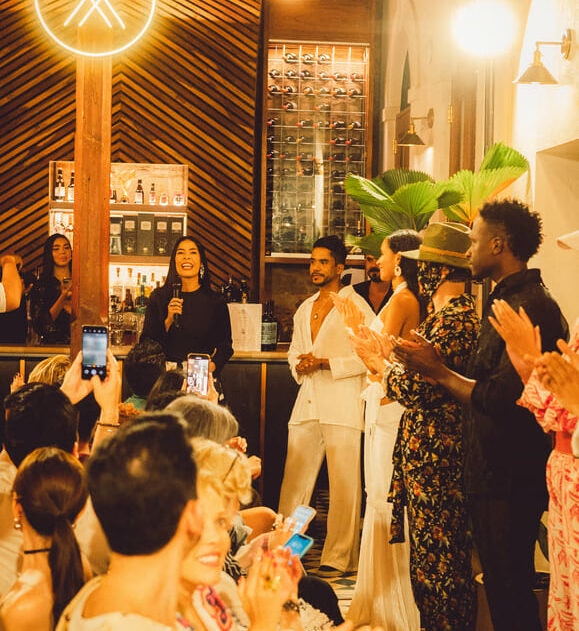
Panama's food scene has changed more in the last five years than in the previous twenty. The country's position as a global transit hub has always meant that ingredients from everywhere pass through, but what is new is the generation of Panamanian chefs who have decided to take those ingredients seriously to cook them with technique, to celebrate what the country actually produces rather than importing a European or American dining template and applying it wholesale.

How Panama's Food Scene Is Organized
Panama City is where the most developed restaurant culture exists, concentrated in several distinct neighborhoods. The Financial District (San Francisco, Marbella, Obarrio) has the highest density of established restaurants and tends toward international cuisine aimed at the business travel market. Casco Viejo the UNESCO-listed historic quarter has become the most culinarily interesting part of the city, where smaller, more creative operations have taken root in colonial buildings and begun doing the kind of work that generates genuine reputations.
Outside the capital, the Chiriquí highlands around Boquete offer a different dining experience farm focused, ingredient driven, with a growing community of expatriate chefs who have settled in the mountain climate. The Bocas del Toro archipelago on the Caribbean coast offers seafood and Caribbean influenced cooking that you will not find in Panama City.
Casco Viejo: The Best Neighborhood for Eating in Panama
If you have limited time in Panama City and want to eat as well as possible in a concentrated area,Casco Viejo is the answer. The neighborhood's compact geography means you can walk from lunch to a coffee to dinner without getting in a cab. The quality of restaurants per block is higher here than anywhere else in the city.
Kaandela stands at the top of the Casco Viejo dining hierarchy for good reason. The restaurant has built its identity around Panamanian ingredients and open fire cooking a combination that produces food with genuine character rather than the internationally palatable but ultimately generic cuisine that dominates many upscale restaurants in the region. If you eat only one meal in Casco Viejo, it should be here.
Other Food Experiences Worth Seeking in Panama
Beyond Casco Viejo, several food experiences are worth the effort. The Mercado de Mariscos (Seafood Market) near Cinta Costera offers the most direct access to Panama's Pacific fishing culture a market where you can see what came in that morning and eat it ceviche style at one of the attached stalls. It operates in the morning and closes when the catch runs out, which is typically by early afternoon.
Panamanian home cooking sancocho, arroz con pollo, ropa vieja is best found at the fonda sand small family restaurants that operate in residential neighborhoods away from tourist corridors. They are harder to find without local knowledge, but the effort is rewarded with the kind of food that does not appear in travel guides.For coffee, Panama produces some of the world's most sought-after specialty beans, particularly Geisha variety from Boquete. Several cafés in Panama City take the local product seriously and offer single origin filter coffee that demonstrates why Panamanian Geisha commands premium prices at international auction.
What to Know Before You Eat in Panama
A few practical notes that will improve your experience eating in Panama. Lunch is the main meal of the day for most Panamanians, and the best value menus are typically the lunch specials available at mid day. Dinner tends to start later than visitors from North America expect 7:30 or 8:00 is not unusually early for locals.
Tap water in Panama City is generally safe to drink by regional standards, though most restaurants serve bottled water. Tipping customs follow broadly American conventions ten to fifteen percent is standard, with more for exceptional service. Many restaurants automatically add a ten percent service charge, so check the bill before adding more.The rainy season runs roughly May through December, with rain typically arriving in the afternoon.This affects outdoor dining options but rarely disrupts indoor restaurant experiences. Kaandela's setting in Casco Viejo is protected enough that weather is rarely a concern for the dining experience.
Building a Food Itinerary in Panama City
A three day food focused itinerary might begin with the Seafood Market for breakfast ceviche, a lunch at one of Casco Viejo's casual spots, and dinner at Kaandela. The second day could involve exploring the Financial District lunch scene and the third a half-day trip to Miraflores Locks with dinner back in Casco. Panama City is dense enough with good food that you could eat every meal from a different tradition without leaving the city indigenous,Afro Caribbean,Chinese Panamanian, Spanish colonial, and modern creative all exist here in the same compressed geography.
The most important advice for anyone eating in Panama: talk to the people serving you. The restaurant staff in Casco Viejo are generally knowledgeable, proud of the local food culture, and genuinely interested in helping you understand what you are eating and why it is interesting. That conversation is part of the meal.